
Our Approach to Project Success Management

Projects do not fail only because they exceed their budget or miss a deadline. Some are delivered exactly as planned but never solve the business problem they were intended to address. Others satisfy the original requirements yet become difficult to evolve as business priorities change.
In our experience, the outcome of a project is usually determined long before the first line of production code is written. Every project, therefore, begins with a simple question: What does success actually look like? At SysGears, the answer to this question guides planning, delivery decisions, and the way progress is evaluated throughout the software development lifecycle.
SysGears in Numbers
16+
years of experience in custom software development
350+
businesses served worldwide
110+
individually trained experts
40+
active software projects
How We Define Project Success
Project success is shaped by multiple factors. At SysGears, we evaluate it across three complementary dimensions and consider a project truly successful when all three are achieved.

Business Impact: The software addresses the need it was created for, whether that means reducing operational costs, improving efficiency, creating new revenue opportunities, or supporting regulatory compliance.
User Adoption and Satisfaction: The solution focuses on genuine user needs without introducing unnecessary friction. Adoption rates, continued usage, and user feedback help show whether it delivers value in practice.
Strategic Alignment: The software supports current objectives while remaining adaptable to future needs. Architecture, technologies, and integration decisions should enable further development without requiring costly rework.

“Many of the problems that affect software projects can be traced back to decisions made early in the process. If the business problem, success criteria, scope, and major risks are understood before development begins, the team has a much stronger foundation for making decisions later. For us, successful project management is largely about creating those conditions early and maintaining them as the project evolves.”
Alex Rybalka
Head of BA/PM Department
Establishing the Foundation for Project Success
Our approach focuses on issues that repeatedly put software projects at risk, which include misunderstood requirements, stakeholder misalignment, uncontrolled scope growth, underestimated risks, and decisions based on untested assumptions. Addressing these areas before implementation provides our team with a stronger basis for planning and delivery.

The initial project request does not always reflect the underlying business challenge. During discovery, business analysts clarify what needs to change, who the solution is intended for, and which assumptions still need to be validated. Depending on the project, we use stakeholder discussions, user research, market analysis, or reviews of existing processes and systems to build that understanding.

Defining Success Criteria
Once the problem is understood, the expected results need to become specific enough in order to guide the project. We work with stakeholders to define measurable outcomes, relevant KPIs, or other indicators that show whether the project is moving toward its objectives. These measures provide a common reference point when priorities or implementation decisions need to be reconsidered later.

Defining the Delivery Scope
Not every feature, even if it seems to be incredibly useful, needs to be included in the first release. Scope definition separates the functionality that is required to achieve the project’s primary objectives from work that can be postponed without undermining the intended outcome. This creates clearer delivery boundaries before new requests and implementation discoveries begin competing for time and budget.

Business expectations also need to be tested against implementation realities. Before development begins, business and technical specialists review architecture options, integration requirements, dependencies, non-functional requirements, and implementation constraints that could affect the proposed solution. The findings help us determine whether the planned approach is feasible and where technical assumptions, estimates, or delivery expectations need to be adjusted.

Identifying Initial Project Risks
Our team identifies uncertainties that can have a negative effect on the proposed scope or delivery plan before the implementation process begins. Among these may be external dependencies, resource availability, technical constraints, and regulatory requirements. Understanding these risks early lets us reflect them in estimates, priorities, as well as contingency planning before delivery commitments are finalized.

Aligning Key Stakeholders
Before the delivery plan is finalized, key stakeholders need to have a shared understanding of the problem being addressed, project priorities, major constraints, and the decisions that require their involvement. Differences identified at this stage can be discussed before they begin affecting requirements, scope, or implementation decisions.
Keeping Projects on Track Throughout Delivery
Once development begins, the project starts generating information that was not available during planning. Effective project management requires incorporating that information into delivery decisions instead of treating the original plan as fixed.

Project oversight goes beyond checking whether planned work has been completed. Our team also considers why deviations occur and what they mean for both upcoming work and existing commitments. This makes it possible to distinguish an isolated delay or issue from a broader pattern that may require priorities, estimates, or the delivery plan itself to be reconsidered.

Early Course Correction
Small deviations become harder to deal with when other work starts depending on them. A delayed requirement, unresolved dependency, as well as an assumption that proves incorrect can affect estimates and upcoming development if it is not addressed in time. Regular review gives us an opportunity to handle these issues before their impact extends to other parts of the project.

Managing Project Changes
New requirements and change requests are a normal part of software delivery, but they need to be considered against existing commitments before development. We assess the expected business value and implementation effort, as well as the potential impact on scope, timelines, dependencies, existing functionality, and technical decisions. Based on this assessment, a change may be implemented, adjusted, postponed, or excluded from the current scope.
How We Identify and Manage Project Risks
Risk management starts during discovery and continues throughout the development process. Potential risks may come from unclear requirements, technical constraints, external dependencies, resource availability, delivery schedules, as well as changes outside the project team’s control.

Not every identified risk requires the same level of attention. At SysGears, we assess them based on their likelihood and potential impact, which allows the team to focus on those that could cause the greatest disruption to the project. The assessment is revisited as more information becomes available and previously identified risks change in relevance.

Risk Response Planning
The appropriate response depends on the nature of the risk. In some cases, our team can change the planned approach in order to avoid it altogether or take preventive action to reduce its likelihood or impact. Other risks may need to be accepted and monitored, with a contingency plan prepared in case they materialize.

Ongoing Risk Monitoring
The risks, which we identify during planning, are reviewed throughout development as the project situation changes. Their status and mitigation measures are updated when necessary, and new risks are added as they emerge. Particular attention is given to early warning signs that indicate when additional action may be required.
How We Measure Project Health
No single indicator provides a reliable picture of project health. Schedule performance may look stable while costs increase, quality deteriorates, or stakeholder concerns begin to surface. For this reason, we monitor project health across several dimensions throughout delivery.
Schedule Health. Planned and actual progress, delivery trends, critical milestones, and dependencies help show whether the project is progressing at the expected pace and where delays may be developing.
Budget Health. Actual spending is compared with the project budget as well as current delivery progress. Cost variance, burn rate, and forecasted spending help identify whether the available budget remains consistent with the work still required.
Quality Health. Defect trends and severity, testing results and coverage, code quality indicators, and technical debt provide insight into whether delivery pressure is beginning to affect software quality.
Stakeholder Health. Regular feedback and emerging concerns help reveal whether stakeholders remain confident in project progress, communication, and the direction of delivery.
These indicators are considered together to provide an overall view of project health. Individual deviations are evaluated in context, particularly when changes in one area begin affecting other aspects of the delivery process.
How We Keep Project Teams Aligned
Software projects involve various people making business, technical, and delivery decisions from different perspectives. Keeping them aligned requires a clear understanding of who makes those decisions and how relevant information is shared throughout the project.

Clearly Defined Roles
Project participants need to know which decisions fall within their area of responsibility and when another role needs to be involved. Project managers coordinate delivery while business analysts, on the other hand, clarify needs and manage requirements and acceptance criteria. Technical leads guide architecture and implementation decisions, and QA specialists focus on testing and quality practices. But when it comes to strategic priorities and final business decisions, they remain with the client or product owner.

Structured Communication
Different project discussions serve different purposes. Day-to-day coordination focuses on current work and blockers; planning and review sessions, on the other hand, address broader delivery questions that require input from several roles. The cadence is adjusted to the project and delivery model, so communication remains regular without turning every issue into another meeting.

Shared Project Visibility
Important project information should not depend on individual conversations or someone’s memory. Requirements, decisions, risks, action items, as well as delivery plans are documented in shared resources where the relevant participants can access them. Keeping this context available makes it easier to follow previous decisions, understand current responsibilities, and avoid reopening questions that have already been resolved.

A Collaborative Working Environment
Team members need to be able to raise concerns even when doing so challenges an existing assumption or plan. An engineer may identify a technical constraint, QA may determine that a requirement is not sufficiently clear or testable, or a BA may uncover missing or conflicting business needs. Bringing those perspectives into the discussion early gives the team more information before a decision is finalized.
What Project Success Looks Like in Practice
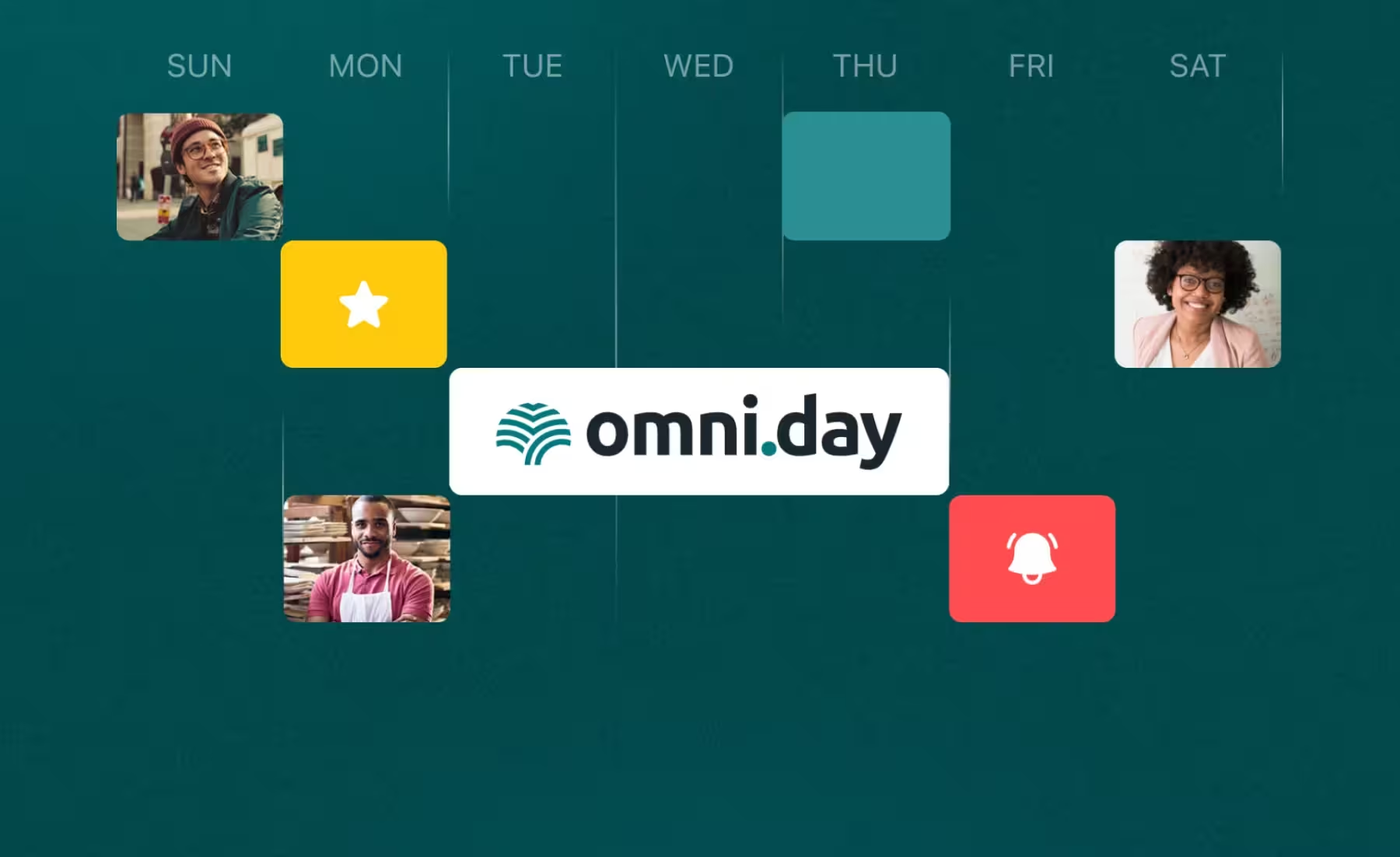
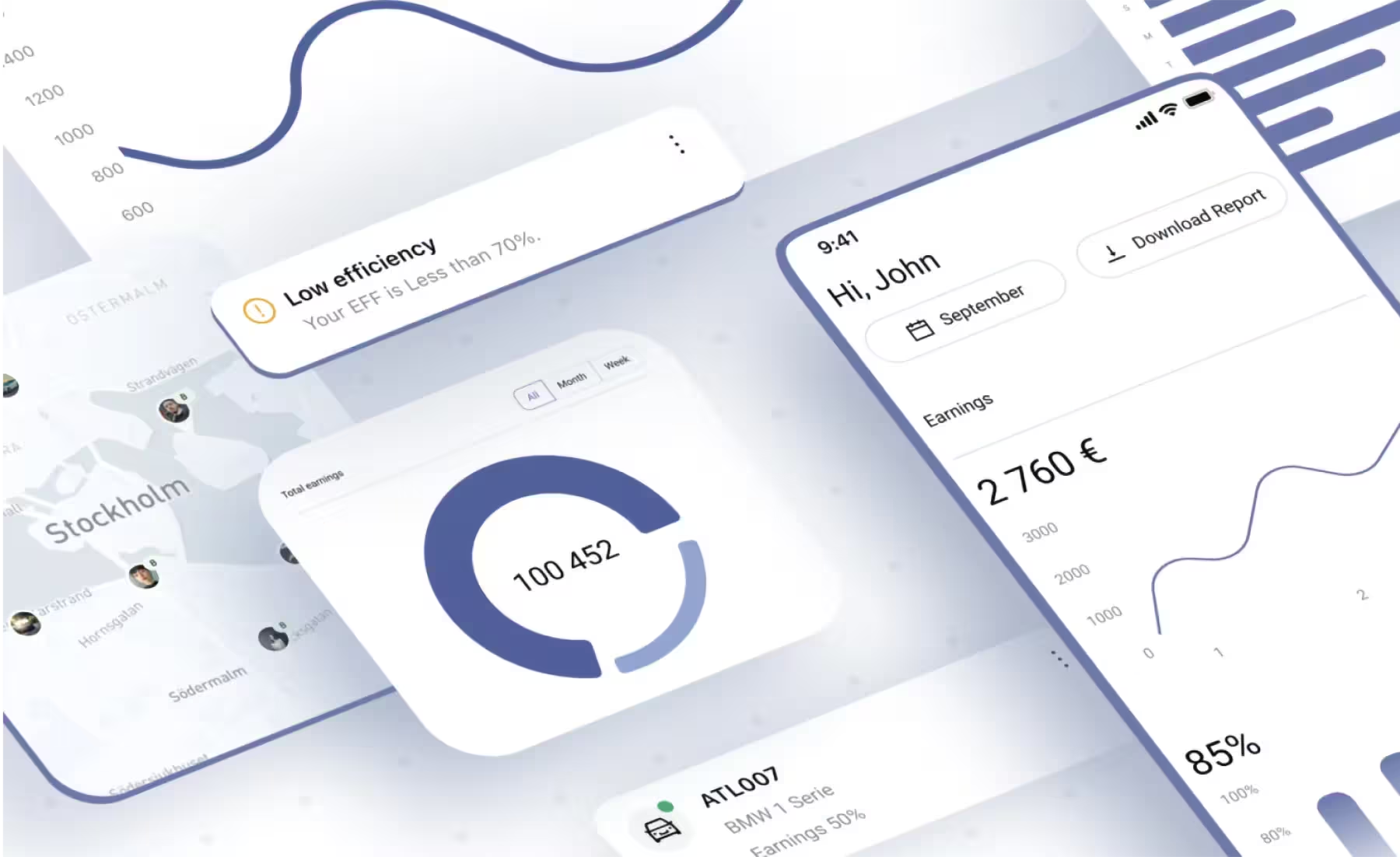
Project success looks different depending on the business problem, technical context, and expected outcome. The examples below show how we have approached these differences in practice.





How Clients Describe Their Experience Working with Us

5.0

“Thanks to SysGears, we successfully launched our apps on the Apple and Google app stores. SysGears provided us with quality design suggestions, improving the usability of our product.”

Tom Setzer
CTO, TotalSDS
5.0
“The team has worked wonderfully and communicated flawlessly throughout the entire project.”
Robert Simunic
Sales Director, Carveco
5.0
“SysGears’ responsiveness and flexibility were key factors to keep the project on track and meet our expectations.”
Executive, Rentweet
5.0
“SysGears had a deep understanding of the project and consistently came up with efficient solutions for implementation.”
Hákon Ágústsson
Founder, MyTweetAlerts.com
Why Organizations Work with SysGears
At SysGears, successful delivery is a shared responsibility across project management, business analysis, and engineering. Specialists from these areas collaborate throughout the project, contributing their expertise when decisions require business, delivery, or technical input.

Business, Delivery, and Technical Expertise in One Team
Project decisions often require input from more than one area of expertise. A change in business requirements, for example, may affect architecture, estimates, testing, or the delivery plan. When a decision has broader implications, SysGears brings together PMs, BAs, technical leads, engineers, and QA specialists. This helps account for both business priorities and implementation constraints.

Experienced Project Leadership
Our project managers and business analysts bring experience that goes beyond coordinating tasks and processes. They navigate changing requirements, competing stakeholder interests, technical constraints, and situations where decisions need to be made with incomplete information. Having this experience helps them provide strategic direction and keep the project focused on its objectives.

Delivery Practices Adapted to the Project
Projects differ in their level of uncertainty, stakeholder involvement, release cadence, as well as existing processes. At SysGears, we adapt our delivery approach to these conditions instead of applying the same methodology to every engagement. We then structure planning, communication, and reporting around the project’s specific needs.

Expertise Developed Beyond Individual Projects
Our project managers and business analysts continue developing their expertise after joining SysGears. Internal onboarding, mentorship, knowledge sharing, and professional development give PMs and BAs opportunities to strengthen their delivery, leadership, and software development knowledge and apply lessons learned across different project environments.
Learn More About Our Approach


Looking for a partner focused on successful software delivery? SysGears combines business, technical, and project management expertise to keep your project on track.
Boost your business with custom software
Tell us about your business needs and we’ll suggest a solution
Thank you!
We have received your request and will get back to you within 1 business day.


