
Custom TMS Software Development
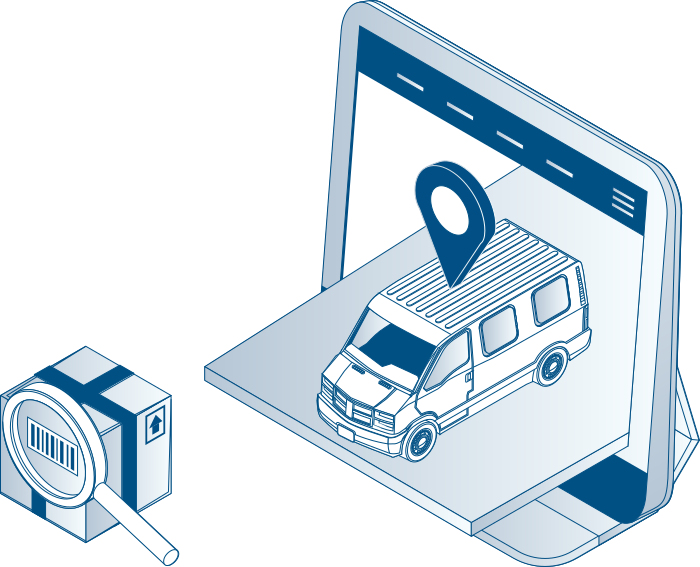
Optimize shipment routes, reduce fuel spending, and improve customer service using transportation management software tailored to your unique needs. SysGears provides full-cycle TMS software development services, consistently translating your requirements into technical solutions that deliver measurable business value.
What is a Transportation Management System (TMS)
As shipment volumes and transportation complexity grow, fragmented spreadsheets, emails, and ERP alone become insufficient for controlling freight costs, order fulfillment, and carrier communication. A transportation management system (TMS), also referred to as transport management software, helps companies plan, execute, monitor, and analyze the movement of goods in a single place.
For transport operators, freight brokers, 3PL providers, and enterprises with complex logistics processes, a TMS application, particularly a custom-built one, becomes a strategic investment. It simplifies route planning, enables real-time shipment tracking, streamlines incident management, and provides actionable performance analytics.
SysGears has been building bespoke applications for transportation and logistics businesses since 2010. We can develop TMS software from scratch or enhance your existing solution with custom features, advanced security measures, and integrations with ERP, WMS, and other systems.
Key Features of Transportation Management Software
SysGears can incorporate the following capabilities into your TMS or build standalone applications to optimize specific tasks.

Set rules for carrier selection (e.g., based on cost, vehicle capacity, or delivery terms), identify matching transportation providers, send RFx requests, and track their status with minimal manual effort — all within one convenient TMS or a separate carrier management system.

Transportation Planning
Analyze historical data on inbound and outbound orders to plan transportation demand; create shipping schedules using customizable templates; and allocate carriers, vehicles, and drivers based on shipment needs, ensuring the most efficient order execution.

Route Optimization
Build optimal delivery routes and adjust them in real time based on traffic, weather, fuel costs, driver hours, and other rules. Respond quickly to changing conditions, reduce fuel overspending, and minimize delivery delays with specialized route optimization software.
Automatically calculate transportation costs based on predefined parameters like distance, weight, or mode, create custom pricing rules, compare carrier pricing, and analyze your shipment spend to identify cost-saving opportunities.

Shipment Document Management
Centralize your transportation documentation in a secure repository, draft documents more quickly with ready-made templates, maintain audit trails, and control document access through role-based permissions.

Transportation Order Management
Create, consolidate, and submit transport orders, set cross-department approval workflows, automate recurring order submission, and track execution statuses within your custom TMS software.

Get a panoramic view of your fleet operation: check available transport, plan maintenance, monitor driver schedules, and allocate the right vehicles to shipments based on route and delivery requirements, avoiding resource conflicts and streamlining dispatch planning.

Real-Time Shipment Tracking
Integrate your TMS with IoT to monitor shipment location, transportation conditions, and driver behavior in real time. Send automated notifications on any unexpected delays, keeping teams, customers, and partners informed on shipment progress.

Exception Management
Automatically detect exceptions, including weather disruptions, route deviations, and missed milestones, and send notifications to the authorized staff to enable timely intervention and minimize impact on service delivery.

Record loss, damage, shortage, and delay claims, track their progress, attach evidence files, and automatically send updates to all parties involved. Set custom approval and escalation workflows to improve accountability and accelerate settlement time.

Transportation Self-Service Portals
Let shippers and carriers manage their business information, submit and receive shipment orders and invoices, and communicate conveniently via a tailored vendor portal. Use a client portal to improve customer service and reduce support staff workload.

Transportation Performance Monitoring
Evaluate carriers’ performance based on service metrics such as on-time pickup and delivery, exception frequency, and transit time. Estimate risks associated with every transportation provider based on internal and external data sources.

Transportation Analytics, Reporting, and Forecasting
Monitor transportation KPIs through centralized dashboards, generate transportation reports, and analyze trends to forecast shipment demand, improve budgeting, and make better strategic decisions.

Security and Compliance
Protect confidential business and customer information through role-based access control, multi-factor authentication, and strong data encryption. Enable audit trails and user activity tracking in transportation documents to support compliance and transparency.
Key Transportation Management Software Integrations
If your IT ecosystem comprises multiple digital tools, streamlining data exchange between them maximizes their functionality. Integrate your TMS with the following solutions to synchronize complex logistics operations and improve supply chain efficiency.

- Book shipments right from your ERP
- Sync shipment tracking updates back to your ERP
- Use up-to-date cost data for accurate billing

Warehouse Management System (WMS)
- Synchronize transportation planning with warehouse operations
- Automate load creation based on shipment readiness
- Adjust shipment priorities drawing on stock levels

Order Management System (OMS)
- Automate shipment creation based on incoming orders
- Prioritize delivery according to order urgency
- Add commentaries to transport orders

- Compare transportation provider rates against your contract discounts
- Streamline shipment documentation exchange
- Track carrier movement in real time to keep the warehouse receiving schedule aligned

Procurement Software
- Validate your actual freight expenses against vendor contracts
- Adjust logistics operations to supplier delays
- Enable procurement teams to see shipment statuses

Accounting Software
- Automatically align freight bills with accounting codes
- Prepare shipment invoices
- Automate invoice matching and payment processing

Transport Management Software Benefits
Custom freight management software development helps streamline logistics operations and improve customer service in a number of ways:

Reduced freight expenses: Plan shipment routes, select the most cost-effective carriers, and optimize load based on vehicle type and transportation conditions.
Improved customer service: Enable real-time shipment tracking, improve delivery times through data-driven transportation planning, and send automated delivery notifications.
Lower manual effort: Automate repetitive tasks like load consolidation, carrier selection, tracking, documentation management, and invoice payment, reducing errors and saving time.
Increased warehouse efficiency: Synchronize your transportation schedules with WMS data so warehouse teams can prepare before the trucks arrive, thus avoiding dock congestion.
Better decision-making: Gather and analyze data on freight spend, carrier performance, route efficiency, and delivery times to further optimize your logistics operations.
Enhanced compliance: Keep your documentation audit-ready, monitor carrier risks, and prevent shipment delays through informed planning powered by your TMS data.

Manage your logistics operations smarter and save costs with a custom TMS designed around your needs.
Our Transportation Management System Development Services
SysGears provides end-to-end transportation software development services, building digital solutions tailored to the unique needs of your business. Whether you seek to create a custom application that addresses a specific pain point or need a comprehensive TMS with route optimization, document management, and shipment tracking software modules, we can help you every step of the way.

We build custom transportation management solutions from the ground up, with our cross-functional team covering discovery, architecture design, development, testing, deployment, and maintenance. We ensure every feature of your TMS effectively supports your workflows, while the system itself remains easy to maintain and scale as your business evolves.

TMS Consulting
Our team provides expert technical advice to transportation businesses, whether they are starting their digitization journey or seeking to improve their existing IT infrastructure. We will help you craft an optimal software development strategy to increase business value, reduce risks, and make the most of the available resources.

SysGears develops transport management mobile apps that enable drivers to receive route changes, capture proof of delivery, and stay informed about any schedule updates on the go. We build mobile applications for iOS and Android using cross-platform technologies that accelerate development and reduce maintenance costs.

If your current transportation management software grows expensive to maintain or no longer meets your corporate needs, SysGears can modernize it without disrupting your business operations. Among other things, we can migrate your solution to a newer tech stack, rearchitect the monolith into independent microservices, optimize cloud resources, and upgrade UI/UX design.

We can integrate your transport management application with your existing digital tools. Leverage TMS integration with WMS, ERP, SCM, and accounting software to minimize communication siloes and ensure the necessary shipment data is always at your fingertips.
Why Choose SysGears For Custom TMS Software Development

16+ Years in Custom Software Development
SysGears is a cross-functional team of experts that steps in when off-the-shelf software falls short or legacy systems stop delivering value. From route optimization tools to full-scale TMS and multimodal transportation software, we will build a custom application that solves your business-specific bottlenecks, matches your software ecosystem, and fully belongs to you.

Cost-Efficient Engineering Strategies
At SysGears, we don’t just write code but strive to maximize business value at minimal cost. Among our cost optimization practices are thorough discovery and early risk analysis, incremental development, and the use of proven prebuilt components and third-party integrations.

Extensive AI and IoT Integration Expertise
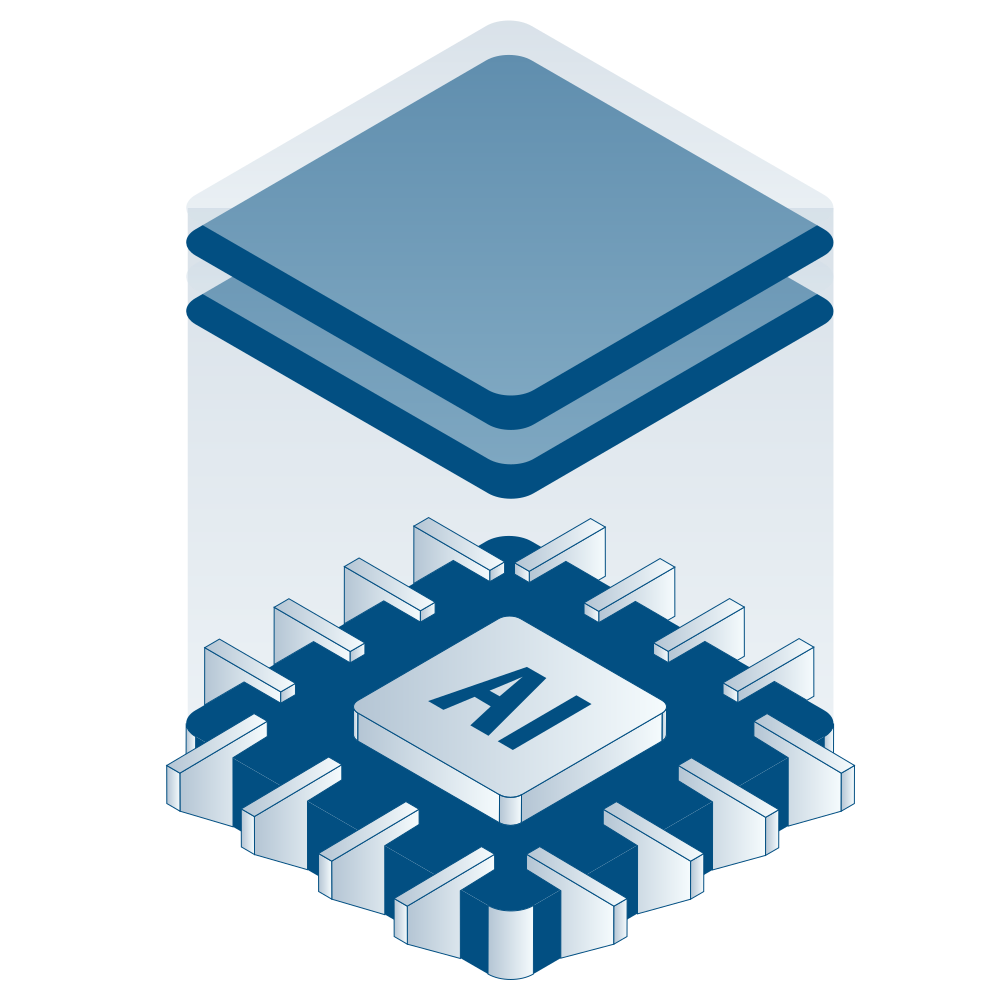
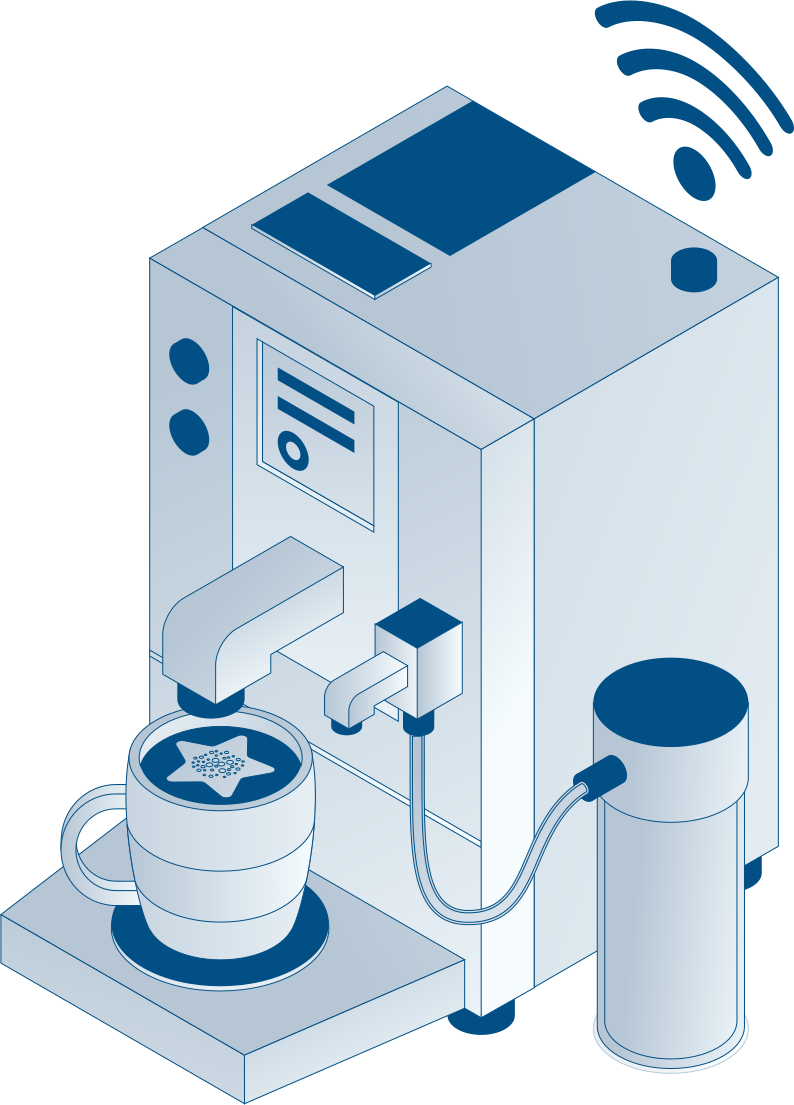
Our software engineers can integrate your TMS with genAI tools that help automate route planning and optimization, document creation and sharing, freight auditing, and more. We can connect your software to IoT devices (e.g., RFID tags, GPS trackers, IoT sensors, and telematics) to enable real-time vehicle tracking, condition monitoring, and data-driven analytics.

Flexible Collaboration Models
We offer diverse collaboration models that can be further adapted to the individual needs of your project. You can fully outsource the development to our cross-functional team that will handle your initiative from start to finish. If you lack the resources to cover certain workstreams or need tech lead and senior-level expertise, we can assemble a dedicated team or allocate individual specialists.
How We Help Transportation Companies in Practice

Smart Mobility Platform Development
Challenge: SysGears partnered with a transportation and mobility company to modernize a smart web platform for processing and analyzing data from cameras and sensors. The solution enables vehicle registration, real-time traffic and infrastructure monitoring, and tracking environmental metrics. Our client sought to improve the customization capabilities of the product and enhance data processing speed and efficiency.
How we solved it: Our team redesigned the platform into microservices, making it easier to add new functionality without disrupting the entire system. This made the platform resilient to heavy workloads and adaptable to the changing business requirements. We also built scalable data pipelines to handle large volumes of data generated by IoT devices and enabled secure integration with third-party services for seamless data synchronization. To support ongoing maintenance and future development, our engineers created comprehensive technical documentation that details system behavior, data collection and detection process, feature flow, and module usage.
Tech stack: REST, Scala, Play 2, Akka, Akka-cluster, Kafka, MongoDB, Angular
What Our Clients Say

5.0

“The overall team was great, the culture of being helpful and going out of their way to make sure we were taken care of. The team members that were assigned to us and worked with were really amazing, and it felt as if they were part of our team.”

Sohrab Tellaie
Founder, omni.day
5.0
“I couldn’t speak more highly of their conduct, competence, trustworthiness, and reliability.”

Adam Wood
Founder & CEO, CertifiedBy.com
5.0
“They are taking ownership of their code and delivering great quality, while providing a streamlined & open communication channel. I’ve worked with a handful of other vendors in the past and have never gained trust for a company like I have with SysGears.”
Moni Ali
Founder & CEO, Web & App Dev Company

Over 350 businesses worldwide have successfully launched their products with SysGears. Let the next be yours!
Our Tech Stack
Programming Languages
JavaScript
TypeScript
Python
Scala
Go
Frontend
React
Next.js
React Native
Expo
Redux
MobX
Apollo Client (GraphQL)
Vite
JavaScript/TypeScript Backend Ecosystem
Node.js
Express
NestJS
Apollo Server (GraphQL)
WebSockets
BullMQ
Redis
Swagger
Sentry
TypeORM
Prisma
Mongoose
Scala Backend Ecosystem
Play Framework
http4s
Akka / Pekko
ZIO
Cats
FS2
Slick
Quill
Doobie
Caliban
Python Backend Ecosystem
FastAPI
Django/DRF
Flask
Celery
SQLAlchemy
Pydantic
Pandas
NumPy
LangChain
LangGraph
Databases
MySQL
PostgreSQL
MongoDB
Cassandra
DynamoDB
Firebase FireStore
Firebase Realtime Database
Redis
Supabase
Neo4j
Dgraph
QDrant
Testing Tools
Jest
React Testing Library
Cypress
Enzyme
Mocha
Chai
Puppeteer
ScalaTest
PyTest
Gatling
Playwright
Cloud / Infrastructure
AWS
GCP
Azure
DigitalOcean
Apache Mesos
DC/OS
Prometheus
Grafana
Terraform
Docker
Kubernetes
AI Integrations
OpenAI APIs
Azure OpenAI Service
Vertex AI
VAPI
Claude
Whisper engine (CUDA)
Gemini
Amazon Rekognition
Big Data
Apache Spark
Airflow
Databricks
Kafka
ELK
Pandas
NumPy
UI Frameworks
Material UI
Tailwind CSS
Ant Design
NativeBase
Tamagui
Advanced Technologies To Maximize Your TMS Potential
Main Steps in Our TMS Software Development Process
First Call
The first step is a brief call, where we discover your project goals and staffing needs, while you learn more about our service offering and cooperation terms. Once aligned, we sign an NDA and a Service Agreement and start our work.
Discovery and Planning
We carefully research your transportation management bottlenecks, review compliance requirements, and identify repetitive workflows to find the most cost-efficient automation opportunities. You receive a clear product development strategy outlining software vision, architecture design, feature set, security measures, and integrations. Then we assemble a team and prepare a step-by-step software implementation plan with optimal resource allocation.
UI/UX Design
Our designers conduct thorough UX research and build your TMS interfaces based on the real-world needs of its end users. Before coding, we create wireframes or interactive prototypes to validate the design with your vision.
Iterative Development
We develop your TMS incrementally, using 2-4 week cycles to complete a new feature or enhance existing ones. Our team holds regular demo sessions to keep you updated and plan the next steps based on your feedback.
Quality Assurance
Our QA engineers join the project at the planning stage and accompany the entire development lifecycle to detect issues early. We carefully test every user flow to ensure the intended tasks are completed without friction. After each software update, we conduct regression testing to verify that everything works correctly following the introduced changes.
Deployment and Maintenance
We deploy your TMS into a live environment via secure CI/CD pipelines. Following the final release, we can remain your long-term partner and handle feature updates, UI/UX enhancements, and other changes to support your evolving business needs.
FAQ
What is the transport management system (TMS)?
Transport management software is a digital solution that helps businesses organize the movement of goods, both inbound and outbound. It serves as a unified hub for logistics operations, streamlining provider selection, route planning, shipment monitoring, payments, and documentation management. TMS enables businesses to automate repetitive tasks such as shipment tracking and document generation, and to centralize most transportation-related back-office processes in one place.
What are the must-have features of a modern TMS?
Core features of a modern transportation management system must cover the entire freight lifecycle:
- Carrier management: automating carrier selection, comparing rates, and maintaining the carrier database
- Route optimization: choosing the most optimal transportation route in terms of distance, traffic, and fuel costs
- Document management: storing, creating, and sharing shipment-related documents
- Real-time tracking: monitoring shipment location and delivery condition based on GPS and IoT sensor data
- Billing: processing invoices, charging, and executing payments
- Analytics and reporting: anticipating transport demand, fuel spending, expected delivery time, and more.
SysGears’ development team can implement all the mentioned features and add AI integration for smarter automation. We rely on agile methodologies, delivering core functionality first, so your TMS starts generating value from the initial go-live.
Our dispatchers still use spreadsheets for route planning — is a full TMS build the right first step, or should we start smaller?
If your team still relies on spreadsheets for route planning, it makes sense to start with a smaller solution that streamlines the biggest manual tasks. When your processes mature, you may expand your software into a full-fledged TMS.
At this point, it is critical to ensure your solution is built to be extensible from the start, so that adding new capabilities doesn’t require a complete rebuild. At SysGears, we prioritize software maintainability, extensibility, and scalability at the early design stage. Our company is dedicated to long-term partnerships, so we can flexibly scale our team to accommodate different stages of your software lifecycle based on your objectives and budget.
How does custom TMS software improve route optimization?
Custom TMS utilizes algorithms to analyze traffic, weather, delivery windows, and vehicle capacity to identify the most efficient routes and reduce fuel spend. In particular, the delivery route can be adjusted on the go in response to new orders, driver availability, and disruptions that may occur on the way.
How much does it cost to build a transportation management solution?
The overall cost of transportation management system development primarily depends on the type and number of custom features, scalability requirements, and integrations with other systems and third-party services. Other pricing factors include the chosen collaboration mode, development team size and expertise, as well as overall development duration.
SysGears works on a time-and-materials basis, meaning that you pay for the actual time we spend on your project, at rates ranging from $39 to $50 (depending on service type and expert seniority). Regardless of the project scope and available budget, we always focus on cost optimization through discovery and planning, maintainable architecture design, iterative development, and business reasoning behind every technical decision.
When should I choose a custom TMS or an off-the-shelf solution?
The right choice depends on the complexity of your logistics operations and your growth plans. Off-the-shelf TMS is an optimal choice for small and midsize companies with straightforward logistics processes and medium shipment volumes, especially when fast deployment and low upfront costs are priorities. A custom TMS will suit best if you operate under highly specific compliance requirements, have unique workflows that ready-made solutions can’t fully support, or seek full ownership of your software for seamless business scaling in the future.
SysGears can build a custom transport management system, taking into account your business goals, user needs, and available resources.
How does a TMS integrate with my existing ERP or WMS?
A transport management system integrates with ERP, WMS, and other systems via APIs, EDI, and flat files, enabling reliable data exchange across an existing software ecosystem. In particular, TMS integration with WMS and ERP eliminates duplicate data entry, reduces the risk of manual errors, and improves visibility into orders, shipments, delivery statuses, and inventory.
SysGears can seamlessly integrate your custom TMS with your existing software ecosystem to maximize the value of your operational data.
Boost your business with custom software
Tell us about your business needs and we’ll suggest a solution
Thank you!
We have received your request and will get back to you within 1 business day.


