
RPA in Healthcare Solutions
SysGears provides RPA services for healthcare to build custom bots that streamline recurring administrative tasks such as patient intake, appointment scheduling, and billing. We enhance our solutions with AI capabilities for context-aware processing of unstructured data and complex, multi-step workflows. We can integrate the tools with your EHR and billing platforms, facilitating secure data exchange without replacing core software.
SysGears in Numbers
16+
уears of experience in custom software development
350+
corporate customers
110+
software development experts
40+
ongoing projects
How RPA Fits In Existing Healthcare Systems
Robotic process automation in healthcare uses software bots to perform high-volume, repetitive tasks by mimicking human actions in applications. It helps coordinate routine processes across EHRs, billing systems, and scheduling platforms, including data management, eligibility verification, and patient record updates. While traditional RPA bots interact with application user interfaces (UI-level automation), hybrid solutions can also leverage APIs for direct system integration and AI-powered processing of clinical and administrative data.
According to a study published in the Journal of Clinical Medicine, RPA cut data abstraction time per patient by up to 73.8%. The technology was also estimated to save more than 260 hours of manual work annually in a clinical setting. By deploying RPA, healthcare organizations execute digital workflows with substantially higher precision, efficiency, and speed.
SysGears develops custom healthcare software with tailored functionality built around your organization’s needs. Our team can cover the entire engineering lifecycle or support specific project stages, including data engineering, application development, and implementation. We align automation functionality with your existing IT ecosystem, integration requirements, and operational workflows.
Healthcare RPA Solutions We Develop
Explore custom RPA solutions by SysGears across core healthcare use cases, with functionality tailored to your existing infrastructure and specific workflows.

Patient Intake and Registration
SysGears builds RPA bots that collect information from digital forms, check required fields, create patient records, enter demographic and insurance details, and flag incomplete submissions for staff to review. Additional functionality can include patient notifications where relevant and custom steps tailored to the organization’s registration workflows.

Appointment Scheduling
RPA manages appointment requests received via web portals or email. It checks doctors’ schedules and open appointment slots, then reschedules visits in connected systems. It also helps with synchronizing treatment calendars, appointment reminders and confirmation emails, and updating patient scheduling systems when plans change.

Insurance Eligibility Verification
The solution can send eligibility requests to insurance providers or log in directly to an insurer’s portal to enter patient data. Once a response comes back, the bot records the coverage status and applicable benefit information in the billing or claims system. Notifications are sent to staff or patients, while discrepancies are flagged for review.

Prior Authorization
Configured bots can identify services that require prior authorization, fill in forms, and submit requests with supporting medical documentation. They also track authorization request status on a payer portal and send follow-up messages to the payer when needed. Clinical staff are notified about approval, denial, or request for additional information (RFI) decisions.

RPA Claims Processing
An RPA bot can use rule-based decision-making to verify claim data against relevant diagnosis and procedure codes as well as detect missing or mismatched information. Other features include claim preparation and submission, tracking request statuses, and sending rejected, unusual, or complex claims for manual review.

RPA for Medical Billing
The tool can automate charge capture and billing data entry by aggregating patient, treatment, and payment information from medical records and entering it into billing software. Further capabilities include generating invoices and patient statements, processing payments, reconciling accounts, and tracking outstanding balances.

Records Management
RPA solutions update existing patient records and transfer data between connected applications. They also support information validation, data reconciliation, duplicate checks, and document routing. In addition, bots handle patient records received from referring physicians into the designated system, reducing repeated manual copying between systems.

Patient Discharge and Follow-Up
This includes drafting discharge summaries and medication lists using approved source data, then sending them to relevant care teams. In addition, the bots automate appointment reminder campaigns and distribute providers’ instructions to their patients. They also facilitate post-discharge calls/messaging to help ensure continuity of care and timely follow-up.

Compliance Reporting
For regulatory compliance, RPA bots can generate scheduled reports and submit them to relevant authorities, maintaining audit logs of changes made to patient data. They extract electronic protected health information (ePHI) and patient consent data from digital forms, scan for duplicate or incomplete entries, and help ensure that documentation is complete and audit-ready.

Medical Inventory Management
RPA bots help track inventory levels of medical supplies, monitor equipment maintenance dates, and check expiry dates of medications. They can also detect when stock levels are reaching predefined thresholds, notify procurement teams to reorder low-stock items, and track deliveries and log them upon arrival, helping reduce medication waste and stockouts.
Technologies and Integrations for Healthcare RPA Solutions

Extend rule-based automation with AI agents to coordinate complex, multi-step workflows and generative AI to extract information from documents, process unstructured data, and facilitate smart decision-making where predefined rules fall short.
We support:
- Intelligent Document Processing
- AI-Powered Data Extraction
- Machine Learning Integration

Connect healthcare automation workflows with existing EHR systems and billing platforms through secure APIs, facilitating reliable data exchange between disparate platforms and applications.
We support:
- EHR and Billing System Integrations
- Health Information Exchange (HIE) Integration
- Custom API Development

Consolidate data from multiple healthcare sources to detect record discrepancies, match corresponding fields, maintain system-wide data integrity, and provide a foundation for operational data analytics dashboards.
We support:
- Healthcare Data Processing
- Data Validation and Reconciliation
- Automated Reporting and Analytics

Looking for RPA development services for healthcare tailored to your workflows and existing systems?
Our Healthcare RPA Development Process
Introductory Call
We start with a brief introductory call to discuss your project goals, current challenges, implementation stage, and envisioned functionality. Once we agree on the scope of cooperation and engagement model, we formalize the partnership and move on to project discovery.
Discovery and Planning
Next, we review your current technical environment, identify operational bottlenecks and repetitive workflows, as well as examine integration and data security requirements. We then define the project scope and form a development plan, taking into account the required functionality and key milestones.
Business Analysis
Our business analysts review the workflows the software must support, gather software requirements, and document every step, system, decision, and exception. This helps determine the functional scope and objectives for each development cycle and prioritize automation opportunities.
Workflow and Integration Design
We design the automation architecture around planned functionality, integrations, expected workloads, and the existing technical environment. We also define how components will work together, accounting for security, performance, regulatory compliance requirements, and target systems each workflow needs to access.
Incremental Development and Testing
We develop automation in short iterative cycles, building bots for prioritized workflows, implementing the planned functionality, and testing integrations with existing systems. Regular demos provide visibility into progress and let us incorporate your feedback as development progresses.
Deployment and Maintenance
SysGears is committed to a long-term collaboration with your organization to ensure seamless functioning and security of your software long after release. We assist with introducing security and compliance updates, upgrading functionality, adding new features and third-party integrations, and scaling the solution to meet growing business needs.
Healthcare Projects by SysGears

SysGears contributed to the development of an ML-powered healthcare software solution for precise medical diagnosis, allowing hospitals to minimize errors, create effective treatment plans, and improve patient recovery rates. By integrating the client’s existing machine learning algorithms into a software product with a graphical user interface, the solution helped doctors identify mistakes before treatment begins and make use of the diagnostic capabilities within their clinical workflows.
Challenge: The client had core machine learning algorithms implemented on their side but lacked a long-term tech partner to support the product development from the proof-of-concept stage through production rollout. Having a stable team with all members passing a security clearance was crucial for the client to safeguard sensitive data and investment.
Solution: Our team built the solution around the client’s existing ML algorithms, focusing on expandability and modularity to enable easy customization by clinics and future business growth. We implemented both basic and advanced security measures to align the solution with HIPAA requirements and local data safety regulations. We signed a HIPAA Confidentiality Agreement and ensured that every team member passed a third-party background check. As the client secured Round A investments, we scaled the team to support their growing business needs.
AI-Powered Home Care Management Software
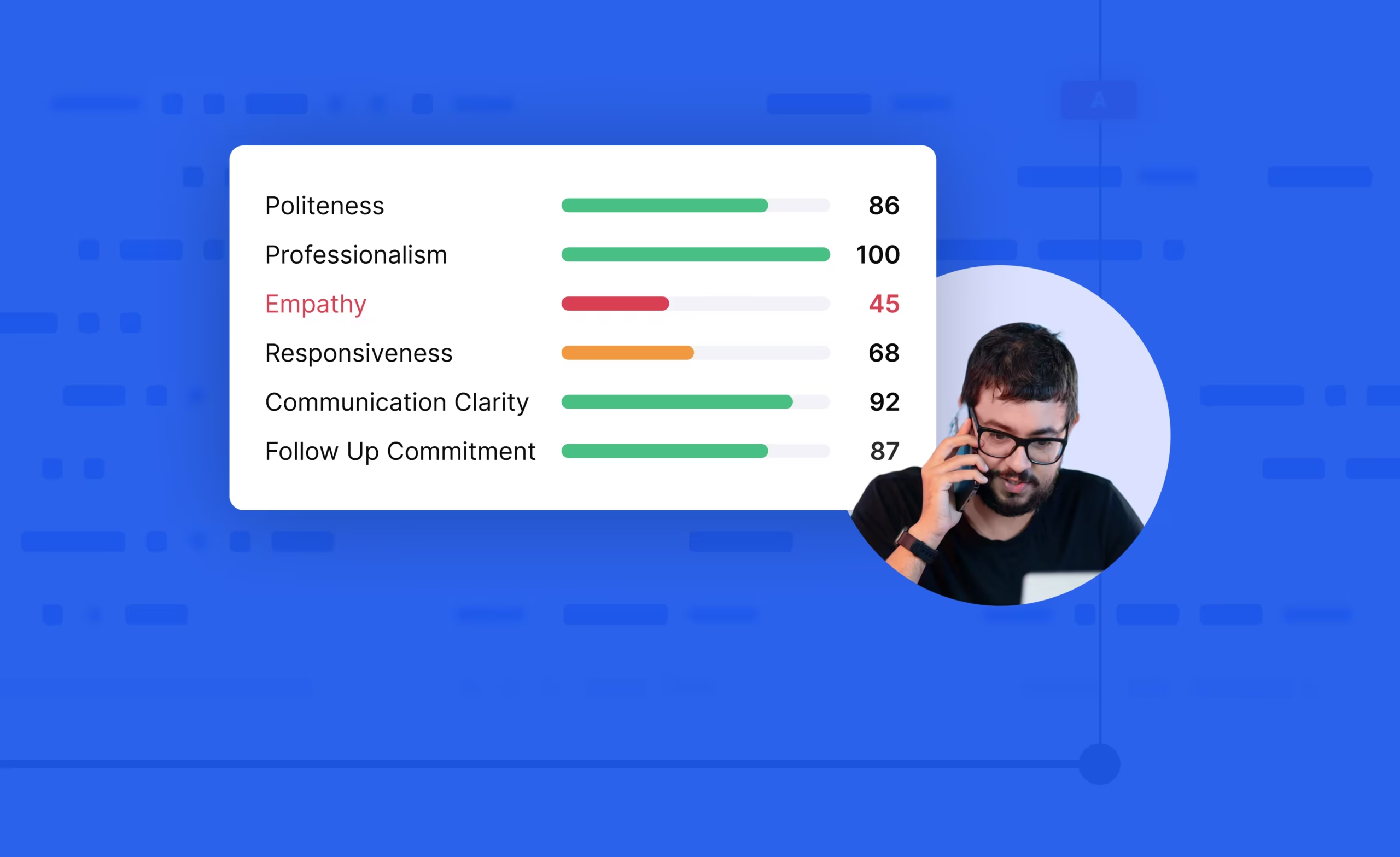
Our client works with home care agencies in the US. Its product uses information from caregiver calls to provide insights into service quality and employee performance and support operational improvements.
Challenge: The company wanted to develop a platform that could process recorded conversations, analyze their content, and use the results to evaluate performance at both the employee and agency levels.
Solution: We developed CommuniCare with functionality for automated call transcription and AI analysis, including summaries, communication quality evaluation, and task extraction. The system also prioritizes extracted tasks according to patient needs and assigns deadlines to support timely follow-up. We also built statistical modules based on call analysis to track personnel performance. CommuniCare uses the analysis results to generate performance scores for individual employees and the agency as a whole. Sensitive data anonymization and other security measures were implemented to protect confidential information.

Big Data Software for Dental Facilities
Our client provides a data analytics product for more than 200 dental clinics in the US, helping clinic owners, consultants, and dental CPAs analyze performance, identify revenue opportunities, and spot profit leaks. The software collects information from dental CRMs to analyze clinic performance.
Challenge: The existing product was inefficient at processing the gathered data, so the company wanted to develop a new version with improved performance and new functionality for presenting results in real time.
Our solution: We researched how the software worked with the supported CRMs, performed in-depth R&D where CRM documentation was insufficient, designed the data model and system interaction process, and rebuilt the system architecture around the product’s performance requirements. We also implemented data processing with Apache Spark to ensure data consistency and efficiency, with results returned in the required format almost immediately after a request, and functionality for presenting the results through dashboards and graphs.
What Our Clients Say

5.0

“The company demonstrated great flexibility in responding to changing requirements, whether adding new features or adjusting existing ones based on user feedback. Their understanding of the complexities and regulatory requirements of the healthcare industry was exceptional.”
Senior Engineering Manager, Health Tech Software Company
5.0
“This company has been nothing but transparent and helpful in the development process. They are taking ownership of their code and delivering great quality, while providing a streamlined & open communication channel. I’ve worked with a handful of other vendors in the past and have never gained trust for a company like I have with SysGears.”
Moni Ali
Founder & CEO, Web & App Dev Company
5.0
“The team has evolved to understand our business workflows, meaning that they are able to provide business solutions and the move to coding them, with minimal additional input from our team. The team has worked wonderfully and communicated flawlessly throughout the entire project.”
Robert Simunic
Sales Director, Carveco
Why Choose SysGears for Healthcare RPA Development

Healthcare Domain Experience
SysGears has a proven track record of delivering software for healthcare organizations, with experience spanning healthcare IT and healthtech projects involving hospital data management systems, AI-powered patient-facing solutions, clinical data workflows, and system integrations. This experience helps us identify and address the unique challenges of each software project, including domain-specific data flows, integration requirements, and security constraints.

Security Built into the Solution
SysGears creates reliable, high-performance healthcare software solutions with advanced protection against cyberattacks, system downtime, and unauthorized data access. Our engineers implement measures such as role-based access control, secure authentication, audit logging, and encryption of data in transit and at rest, while following OWASP guidance and applicable regulatory requirements, including HIPAA and GDPR.

AI-Driven Automation Shaped Around Your Workflows
Our team combines strong AI / ML expertise with a business-driven approach to development, working closely with you to understand your organization’s needs, identify opportunities for AI adoption, and integrate AI capabilities into your software and processes. We help equip healthcare applications with AI-driven tools for interpreting and processing medical documents, intelligent information extraction, real-time decision support, and more adaptive RPA workflows.

Flexible Engagement Models
SysGears offers three convenient cooperation models, which can be further adapted to your needs: full-cycle IT services, a dedicated development team, and staff augmentation. We can handle software delivery from start to finish, provide individual developers or other specialists to boost your in-house resources, or assemble a team responsible for a defined workstream or part of the system.
Technologies Behind Our Healthcare Automation Solutions
Programming Languages
JavaScript
TypeScript
Python
Scala
Go
Frontend
React
Next.js
React Native
Expo
Redux
MobX
Apollo Client (GraphQL)
Vite
JavaScript/TypeScript Backend Ecosystem
Node.js
Express
NestJS
Apollo Server (GraphQL)
WebSockets
BullMQ
Redis
Swagger
Sentry
TypeORM
Prisma
Mongoose
Scala Backend Ecosystem
Play Framework
http4s
Akka / Pekko
ZIO
Cats
FS2
Slick
Quill
Doobie
Caliban
Python Backend Ecosystem
FastAPI
Django/DRF
Flask
Celery
SQLAlchemy
Pydantic
Pandas
NumPy
LangChain
LangGraph
Databases
MySQL
PostgreSQL
MongoDB
Cassandra
DynamoDB
Firebase FireStore
Firebase Realtime Database
Redis
Supabase
Neo4j
Dgraph
QDrant
Testing Tools
Jest
React Testing Library
Cypress
Enzyme
Mocha
Chai
Puppeteer
ScalaTest
PyTest
Gatling
Playwright
Cloud & Infrastructure
AWS
GCP
Azure
DigitalOcean
Apache Mesos
DC/OS
Prometheus
Grafana
Terraform
Docker
Kubernetes
AI Integrations
OpenAI APIs
Azure OpenAI Service
Vertex AI
VAPI
Claude
Whisper engine (CUDA)
Gemini
Amazon Rekognition
Big Data
Apache Spark
Airflow
Databricks
Kafka
ELK
Pandas
NumPy
UI Frameworks
Material UI
Tailwind CSS
Ant Design
NativeBase
Tamagui
Explore the Benefits of RPA in Healthcare Organizations

Reduce manual effort, optimize employee performance, and lower operational costs by delegating repetitive, time-consuming workflows to RPA bots.

Faster Processes
Handle routine tasks faster with RPA bots to reduce turnaround times, accelerate service delivery, and streamline administrative workflows without extending working hours.

Data Accuracy
Minimize manual data-entry errors during patient registration, EHR updating, or billing. Maintain consistency across healthcare systems, detect record discrepancies, and bridge legacy data silos.

Free up employee schedules for complex activities requiring human judgment, allowing healthcare staff to redirect their focus to high-value tasks and maximize organizational output.

Relieve employees of taxing and monotonous duties, enabling them to apply their skills to other areas, reduce overload, improve performance, and increase job satisfaction and retention.

The tool can automate charge capture and billing data entry by aggregating patient, treatment, and payment information from medical records and entering it into billing software. Further capabilities include generating invoices and patient statements, processing payments, reconciling accounts, and tracking outstanding balances.
How We Recommend to Implement RPA in Healthcare Without Replacing Existing Systems
Based on our experience, we recommend a gradual approach to introducing RPA in healthcare while avoiding unnecessary system changes:
Identify High-Volume Repetitive Tasks
Consider repetitive processes with predictable rules and frequent errors or delays.
Standardize Workflows
Automation works best with standardized input and output formats and clear exception handling rules.
Launch a Pilot Project
Start with one or two simple processes to test performance and validate ROI before expanding.
Measure and Optimize
Track processing time, manual hours saved, error rates, and transaction volume to measure results.
Scale Gradually
Expand automation to other departments once the process is stable and results are proven.
Check Other Services and Solutions for Healthcare from SysGears



FAQ
What healthcare processes are worth automating with RPA first?
Start with frequent administrative workflows such as patient registration, insurance eligibility verification, medical billing, claims processing, and appointment scheduling. Identify repetitive tasks and operational bottlenecks where RPA can automate data entry, patient data updates, and compliance reporting. Prioritize processes based on business impact, integration requirements, and security needs to improve efficiency, maximize accuracy, and reduce administrative workload.
How long does it take to get the first RPA bot into production at a hospital or clinic?
The first bot can move into production once the team has reviewed the current technical capabilities, documented the software requirements, and confirmed that the required system access and safeguards are in place. A bot that transfers data between an existing EHR and billing software may need a different scope from one handling documents in inconsistent formats. We develop in short iterative development cycles, with regular demos to incorporate feedback and refine the solution before deployment.
How do you keep RPA bots HIPAA-compliant when they handle PHI?
For RPA bots handling PHI, we implement data encryption, multi-factor authentication, role-based access control, proper secrets management, and comprehensive audit logging. We design the architecture to be secure from the start, with limited access to PHI and secure bot infrastructure, and we execute a formal Business Associate Agreement (BAA) prior to project onboarding. Security controls are defined by how PHI is stored, transmitted, and accessed, as HIPAA compliance also requires appropriate organizational policies, procedures, and administrative safeguards for handling sensitive healthcare data.
What’s the difference between RPA and AI-powered automation for medical documents?
RPA can automate claim submission and move data between EHR fields, provided the workflow follows a consistent set of rules. Medical documents are less predictable. Referral letters, EOBs, and prior authorizations vary enormously in format, so rigid bots may struggle to extract the right details. AI can interpret that unstructured input, but clinical information still requires human review before it is used in care decisions.
Is healthcare RPA worth it for a mid-sized clinic, or only for large hospital systems?
RPA isn’t just for large hospital systems. Mid-sized clinics can optimize workflows by automating high-volume, repetitive tasks such as billing or patient data entry, without replacing their existing systems. The sensible starting point is to identify repetitive workflows that create administrative bottlenecks, then weigh integration requirements, maintenance needs, and the cost of an in-house team before expanding automation.
Can automation solutions be integrated with legacy systems?
Yes. RPA bots can interact with legacy systems through their user interfaces, replicating human actions such as data extraction and entry without changing the underlying software. Where deeper integration is needed, we design the integration approach based on your systems and the access methods they support, using custom APIs, middleware, or iPaaS. A hybrid approach can combine HL7 or FHIR for data exchange with RPA for workflow automation.
How much does RPA in healthcare cost to implement and maintain?
The cost of healthcare RPA implementation and maintenance may vary a lot, depending on process complexity, the number of bots, RPA platform selection, integrations, and compliance requirements. For example, simple single-process automation may cost around $50,000, while enterprise-wide RPA programs can exceed $250,000. Annual platform licensing may add $5,000–$15,000 per bot.
SysGears works on an hourly basis, with rates ranging from $35 to $80 per hour depending on the expert’s role and seniority. We estimate the project based on your healthcare automation needs and existing technical environment.
Boost your business with custom software
Tell us about your business needs and we’ll suggest a solution
Thank you!
We have received your request and will get back to you within 1 business day.


