
Shipping Management Software Development
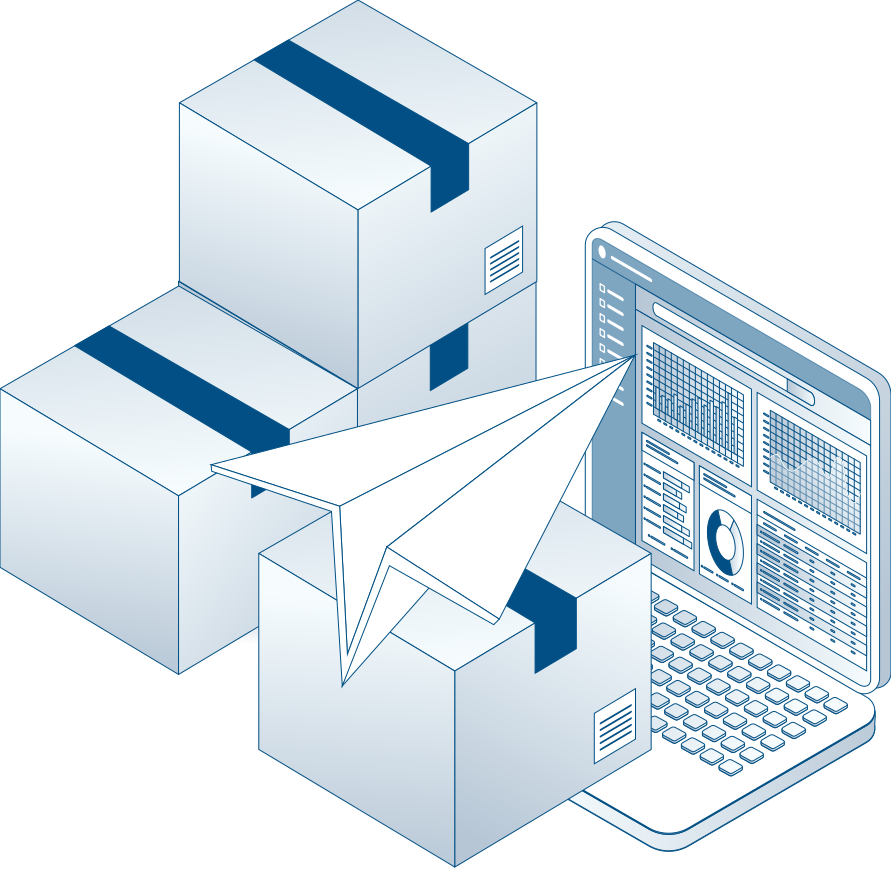
Build shipping management software tailored to your operations to streamline shipment operations, optimize route planning and order fulfillment, and orchestrate high-volume delivery processes. Leveraging shipping software development services by SysGears, you can improve cross-carrier visibility, strengthen delivery performance, and adapt to the growing complexities of international markets.
The logistics industry continues to scale rapidly, driven by ecommerce growth and expanding shipment volumes, with the global shipping software market projected to reach $22.23 billion by 2030 as companies continue investing in automation and visibility tools. Managing multiple carriers, tracking deliveries, and coordinating fulfillment workflows becomes increasingly difficult, hence creating the need for a centralized shipping management system that enables holistic operational visibility and control.
Founded in 2010, SysGears builds custom logistics and shipment software tailored to the complex needs of the industry, helping companies plan, execute, and monitor shipment processes in a single platform. Whether it is a multi-carrier shipping application or a custom TMS software, you gain the solution that will reduce errors and manual work, improve tracking accuracy, and support reliable decision-making.
Key Features of Shipping Management Software

Monitor shipments with real-time cargo and delivery tracking, enabling your team to oversee delivery progress, predict delays, and respond proactively to disruptions across your shipping management system. Integrate data from IoT sensors and GPS devices to maintain continuous visibility into vehicles, freight movement, and transportation assets.

Multi-Carrier Management
Connect your multi-carrier shipping software to leading providers and compare rates, transit times, and service conditions across various carriers. Set the rules for carrier selection, automate shipment allocation, and reduce dependency on a single provider while improving delivery planning and transportation cost control.

Order and Inventory Synchronization
Ensure accurate fulfillment by syncing orders and inventory across warehouses and distribution centers with real-time updates. Integrate ERP and WMS platforms to maintain stock accuracy, reduce the risk of overselling, and support efficient order processing within your shipping and logistics management software ecosystem.

Automate the generation of shipping labels, invoices, packing slips, and customs documents using configurable templates to accelerate processing across high-volume operations. Centralize shipment records in a secure repository, maintain audit trails, and reduce manual entry errors while supporting compliance and ensuring consistency.

Improve transportation efficiency with a custom shipping management system, complete with intelligent route planning and dynamic scheduling based on traffic and weather data, delivery windows, and operational constraints. Build optimal delivery routes and adjust them in real time to reduce fuel consumption, shorten transit times, and improve fleet utilization across logistics operations.

Analytics and Performance Monitoring
Gain actionable operational insights through centralized dashboards and custom reporting tools that monitor delivery times, carrier performance, transportation costs, and fulfillment KPIs. Analyze shipping trends to improve forecasting accuracy, optimize budgeting, and leverage data-driven logistics planning.

Identify disruptions early with exception management workflows that detect shipment delays, failed deliveries, route deviations, and operational bottlenecks. Send automated notifications to authorized staff to enable timely intervention, minimize impact on service delivery, and maintain consistent delivery performance.

Customer Notifications and Communication
Keep customers informed with automated notifications on shipment status, dispatch, and completed deliveries. Improve customer service and reduce support workload by providing real-time updates, proactive delay alerts, and transparent communication across the entire shipping lifecycle.

Define business-specific logic and rules based on destination, shipment type, weight, delivery priority, or cost thresholds. Automate recurring workflows and standardize order processing, ensuring each shipment follows your preferred fulfillment strategy aligned with your operational and financial goals.

Integration with ERP, WMS, and Ecommerce Platforms
Integrate your shipping management system with ERP, WMS, CRM, ecommerce platforms, and accounting tools to centralize operations and consolidate fragmented workflows. Our engineers design reliable and secure data exchange across your systems, helping you streamline order processing, financial reporting, and client interactions.

Coordinate dispatch operations with tools that automate delivery scheduling, vehicle assignment, and workload distribution. Allocate carriers, vehicles, and drivers based on shipment requirements and real-time conditions to improve the efficiency of your logistics operations, reduce delays, and utilize resources smartly.

Billing and Invoicing Automation
Streamline shipment billing workflows with automated invoicing, freight rate calculation, and carrier charge reconciliation. Integrate accounting platforms to allocate costs efficiently, unify expense tracking, and maintain accurate financial records across multiple logistics operations.

Cloud-Based Accessibility and Scalability
Deploy your SaaS ship management software in the cloud to support distributed teams, manage shipments from anywhere, and scale operations without performance limitations. SysGears develops scalable cloud-based logistics platforms designed for high availability, operational flexibility, and long-term business growth.
Explore the Benefits of Shipping Management Software

Optimize shipping spend by selecting the most cost-effective carriers and leveraging rate comparison across carriers. Intelligent routing and planning help you reduce unnecessary expenses while ensuring efficient resource allocation across your logistics operations.

Automate repetitive processes like labeling, order processing, and tracking to reduce manual effort and errors. This leads to faster workflows and streamlined shipping operations, enabling your team to focus on higher-value logistics tasks.

Gain broader visibility into shipping operations with real-time tracking, enabling teams to monitor shipments, identify issues early, and maintain transparency across warehouses, carriers, and customer touchpoints.

Leverage centralized analytics and reporting tools to analyze performance, costs, and delivery times. With data-driven decision-making, you can identify inefficiencies, optimize workflows, and continuously improve shipping performance.

Deliver reliable shipping experiences with real-time updates and automated notifications, keeping customers informed throughout delivery. This improves transparency and increases customer satisfaction and loyalty through predictable and timely service.

Adapt to increasing demand with a scalable ship management platform designed to handle higher volumes, new carriers, and expanded markets, thus supporting operational stability and flexibility as your business grows.

Minimize costly mistakes by automating data entry and validation workflows, reducing inconsistencies in shipping operations. This helps improve accuracy while cutting down manual errors and improving overall process reliability.

Maintain compliance with shipping, customs, and data protection requirements through automated documentation and audit-ready records. Built-in controls support continuous regulatory adherence and protect sensitive operational data.


Need to replace spreadsheets, disconnected carrier portals, or limited off-the-shelf tools? SysGears develops tailored shipping systems built precisely for your operational needs.
Technologies Powering Modern Shipping Operations
AI and machine learning algorithms automate route optimization, carrier selection, and delivery scheduling. We implement AI integrations that support predictive disruption detection, dynamic route optimization, and data-driven decision-making across high-volume shipping operations.

We build cloud-based shipping management systems that facilitate scalability and instant access across locations and teams. Cloud infrastructure enables real-time data exchange, flexible integrations, and stable operation under growing volumes across multi-warehouse and multi-carrier environments.
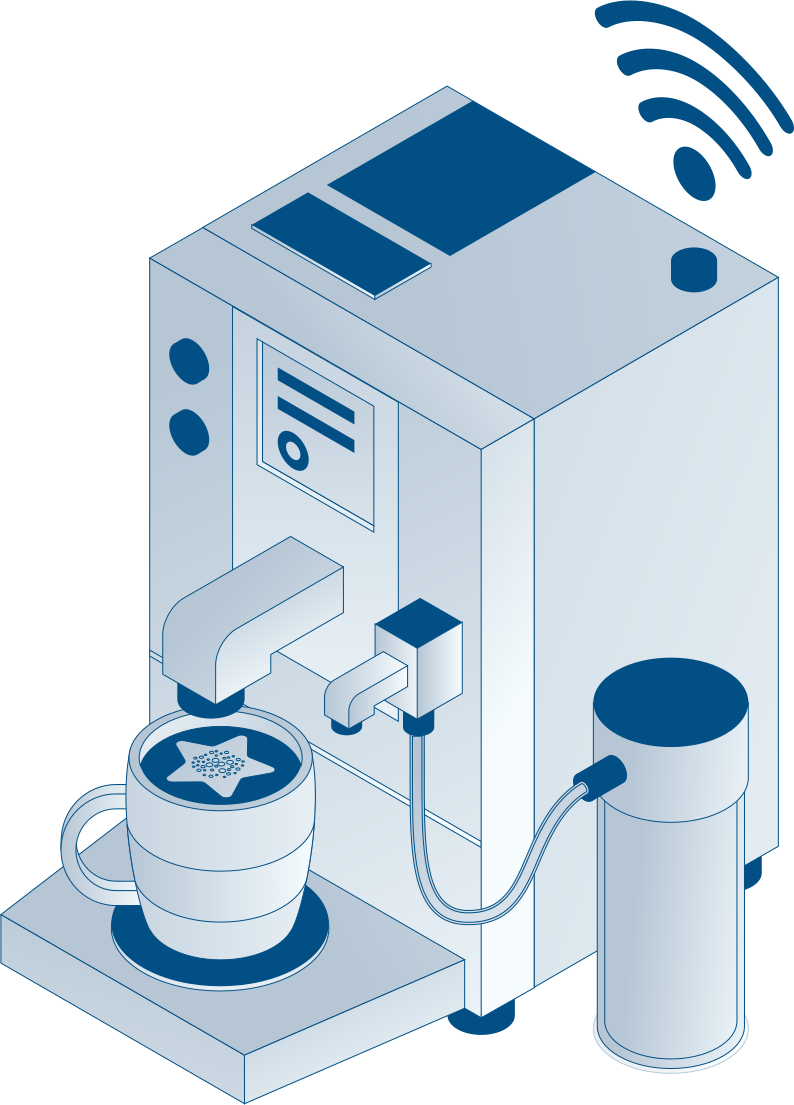
Integrate IoT technologies, GPS tracking, RFID, and connected sensors into your shipment management system to maintain real-time visibility into shipment location and cargo conditions. Businesses can monitor temperature, humidity, and handling events, ensuring improved supply chain visibility and better control over sensitive or high-value shipments.
We implement big data processing and analytics tools to structure and analyze large volumes of operational, carrier, and shipment data. Advanced analytics helps identify inefficiencies, forecast shipping demand, optimize transportation costs, and support faster, insight-driven planning across logistics workflows.
Our Development Process
First Call
We start with a brief call to discover your project goals, operational challenges, and staffing needs. Here, you learn about our approach, cooperation terms, and service offering, ensuring early alignment before moving forward.
Discovery & Planning
Our team conducts an in-depth analysis of your shipping workflows, systems, and integration landscape. We identify bottlenecks, assess compliance requirements, and map out automation opportunities. You receive a clear product development strategy covering architecture, feature scope, integrations, and optimal resource allocation, followed by a step-by-step implementation plan.
UI/UX Design
We design user-centric interfaces based on real operational workflows. Using wireframes and interactive prototypes, we validate usability early, ensuring intuitive navigation, fast task execution, and clear visibility across shipping, order, and logistics processes.
Iterative Development
Our experts build your shipping management system in short development cycles, delivering most relevant features incrementally. Through regular demo sessions and feedback loops, we ensure continuous alignment while maintaining scalability, performance, and readiness for evolving business needs.
Integration
We integrate your solution with ERP, WMS, and carrier systems, enabling consistent and secure data flow across systems. This ensures synchronized operations, real-time updates, and a unified environment for managing shipments, orders, and logistics workflows.
Quality Assurance
Our QA engineers accompany the entire development lifecycle, testing functionality, integrations, performance, and data accuracy. Through proactive testing and regression checks, we ensure reliable workflows and stable system behavior across all shipping scenarios.
Deployment & Maintenance
We deploy your solution using secure CI/CD pipelines and support post-release evolution. As your long-term partner, we deliver updates, performance improvements, and enhancements to keep your system aligned with growing shipment volumes and business needs.
SysGears’ Case Studies

Smart Mobility Platform Development
SysGears participated in developing a smart mobility platform that analyzes data from IoT devices, enabling vehicle identification, real-time traffic monitoring, environmental metrics tracking, and more. Our team worked on the solution’s microservice architecture, enhancing data processing speed and efficiency. Our developers implemented scalable data processing pipelines to handle the large volumes of data from IoT devices. We provided the possibility of integrating the platform with third-party systems and enabled safe data export and synchronization, ensuring data security and integrity.
Client Testimonials

5.0

“SysGears exhibits great flexibility, adaptability, and receptiveness towards the client’s needs. Should the client consider expanding their team, they have the ability to immediately provide highly qualified engineers that can integrate well with internal development staff.”

Alex Kushnir
Solution Architect, Sestra Systems
5.0
“SysGears has delivered new functionality on time for each iteration, achieving user satisfaction with the updates. The team completes tasks promptly, is attentive to the client’s needs and willing to scale their services, and proactively suggests solutions while maintaining clear communication.”
Jane
Client Success Manager, Custom Software Development Company
5.0
“They were genuinely invested in the success of the project and made an effort to align their work with our goals and overall product direction. Their level of engagement, long-term mindset, and solid technical expertise make them a really reliable partner.”
Anastasiia Chala
CMO, Stormotion
Technologies We Use
Programming Languages
JavaScript
TypeScript
Python
Scala
Go
Frontend
React
Next.js
React Native
Expo
Redux
MobX
Apollo Client (GraphQL)
Vite
JavaScript/TypeScript Backend Ecosystem
Node.js
Express
NestJS
Apollo Server (GraphQL)
WebSockets
BullMQ
Redis
Swagger
Sentry
TypeORM
Prisma
Mongoose
Scala Backend Ecosystem
Play Framework
http4s
Akka / Pekko
ZIO
Cats
FS2
Slick
Quill
Doobie
Caliban
Python Backend Ecosystem
FastAPI
Django/DRF
Flask
Celery
SQLAlchemy
Pydantic
Pandas
NumPy
LangChain
LangGraph
Databases
MySQL
PostgreSQL
MongoDB
Cassandra
DynamoDB
Firebase FireStore
Firebase Realtime Database
Redis
Supabase
Neo4j
Dgraph
QDrant
Testing Tools
Jest
React Testing Library
Cypress
Enzyme
Mocha
Chai
Puppeteer
ScalaTest
PyTest
Gatling
Playwright
Cloud / Infrastructure
AWS
GCP
Azure
DigitalOcean
Apache Mesos
DC/OS
Prometheus
Grafana
Terraform
Docker
Kubernetes
AI Integrations
OpenAI APIs
Azure OpenAI Service
Vertex AI
VAPI
Claude
Whisper engine (CUDA)
Gemini
Amazon Rekognition
Big Data
Apache Spark
Airflow
Databricks
Kafka
ELK
Pandas
NumPy
UI Frameworks
Material UI
Tailwind CSS
Ant Design
NativeBase
Tamagui
Why Choose SysGears for Shipping Management Software Development

Extensive Expertise in Logistics Industry
With over 16 years in transportation and logistics software development, we understand complex shipping workflows, carrier ecosystems, and fulfillment challenges. Our team builds custom shipping management software that aligns with real operational needs, helping you optimize logistics processes and handle growing shipment volumes with confidence.

Custom-Tailored Solutions
We develop custom shipping management systems aligned with your workflows, integrations, and business logic. Instead of relying on generic tools, you get tailored software that matches your digital ecosystem and business workflows, accommodates multi-carrier operations, and aligns with evolving logistics demands.

Proven Track Record
Since 2010, SysGears has delivered scalable logistics platforms that improve efficiency and reduce operational overhead. Our experience spans TMS, fleet management, and shipping software, helping companies streamline operations and achieve measurable improvements in delivery speed, accuracy, and cost control.

Security and Compliance Built-In
We implement secure-by-design principles, including encryption, RBAC, MFA, and controlled access management to protect operational and shipment data. With NDAs and Service Agreements in place, your data, workflows, and IP rights fully belong to you while remaining compliant and audit-ready.

Ready to modernize your shipping operations with a custom solution built precisely for your business needs?
FAQ
What is shipping management software and what business problems does it solve?
Shipping management software is a centralized system that helps companies plan, execute, and monitor shipments across carriers, warehouses, and order systems. It replaces fragmented tools, spreadsheets, and carrier portals with a unified operational workflow.
The software addresses issues such as manual order processing, limited shipment visibility, inconsistent carrier selection, and high operational error rates. By automating repetitive workflows and enabling real-time tracking visibility, businesses can reduce delays, improve coordination, and optimize transportation performance.
At SysGears, we build custom shipping management software that consolidates transportation operations into a structured environment, enabling better operational control, cost efficiency, and data-driven decision-making.
What features should I prioritize when building a custom shipping management system?
Start with core operational capabilities such as real-time shipment visibility, dispatch management, carrier integrations, and flexible API connectivity with ERP, WMS, and ecommerce platforms. These functions form the foundation of scalable custom TMS software.
For execution workflows, prioritize mobile accessibility for drivers and couriers, offline support, configurable business rules, and automated dispatching instead of rigid operational logic. Features like digital POD, dynamic rule-based carrier selection, and customizable workflows help your platform adapt as shipping complexity grows.
Our experts design systems around integration-ready architecture and configurable operational logic, ensuring your software evolves without constant vendor-side modifications or process bottlenecks.
What types of companies benefit most from custom-built shipping software?
Custom shipping platforms are particularly valuable for ecommerce businesses, 3PL providers, freight forwarders, manufacturers, and distributors managing multi-carrier environments and high shipment volumes. Organizations struggling with disconnected systems, spreadsheet-based coordination, or limited operational visibility benefit the most. A tailored solution helps centralize workflows, improve shipment coordination, and support scalable logistics growth without disrupting existing operations.
SysGears builds tailored systems that reflect your internal workflows and operational requirements, rather than forcing your business into predefined software limitations.
Is custom shipping software only viable for large logistics companies, or does it make sense for mid-sized operations too?
Custom logistics platforms are not limited to enterprise-level organizations. Mid-sized ecommerce and logistics companies often gain substantial value from replacing manual coordination, spreadsheets, and disconnected shipping tools with a centralized ship management platform. A tailored system helps unify operations without replacing your entire infrastructure, improving shipment visibility, operational consistency, and process efficiency from early growth stages.
Our company develops solutions that adapt to your operational maturity, helping mid-sized teams transition from fragmented workflows to structured, efficient shipping operations.
What role does ship management software play in the logistics industry?
Shipping management software plays a central role in modern logistics by connecting order processing, carrier management, dispatching, and shipment tracking within a single operational layer. Efficiency gains come from reducing manual coordination and automating operational workflows. For example, intelligent route planning significantly reduces scheduling time, while automated dispatching replaces spreadsheet-based shipment allocation. Real-time tracking and digital proof-of-delivery also improve transparency and reduce customer support workload.
In practice, by leveraging shipment logistics software development by SysGears, our client companies have already achieved measurable improvements in productivity through custom-tailored solutions, with significant gains in terms of delivery coordination, administrative efficiency, and ultimate cost reduction.
How does shipment management software help reduce delivery costs?
A shipment management system helps reduce transportation expenses through carrier rate comparison, rule-based routing, automated dispatching, and operational workflow automation. Route optimization reduces fuel consumption and delivery time, while intelligent shipment allocation improves dispatcher productivity and resource utilization. Automation also lowers labor effort for tasks like dispatching, labeling, reporting, and shipment coordination. Additionally, improved tracking visibility and proactive communication help reduce failed deliveries, customer claims, investigations, and support overhead.
SysGears engineers tailor shipment management platforms to your logistics infrastructure and exact operational needs, thus improving coordination, reducing logistics expenses, and facilitating future business growth.
Can delivery management software be integrated with existing ERP or CRM systems?
Yes. Integration with ERP, CRM, WMS, accounting systems, and carrier platforms is a core requirement for modern shipping and logistics management software. The key challenge lies in handling data inconsistencies, latency, and system-specific logic.
SysGears specializes in building integration-ready architectures that align your shipping workflows with the rest of your IT ecosystem. Our experts implement API-driven integrations along with custom connectors for legacy systems to ensure reliable data synchronization without disrupting operations.
Boost your business with custom software
Tell us about your business needs and we’ll suggest a solution
Thank you!
We have received your request and will get back to you within 1 business day.


